ARVE error: Mode: lazyload not available (ARVE Pro not active?), switching to normal mode
Distances, dreams and desires – a daughter seeks to understand her father.
By Omara Poppe (2024)
‘May I tell you a story?’ ‘The story may come.’
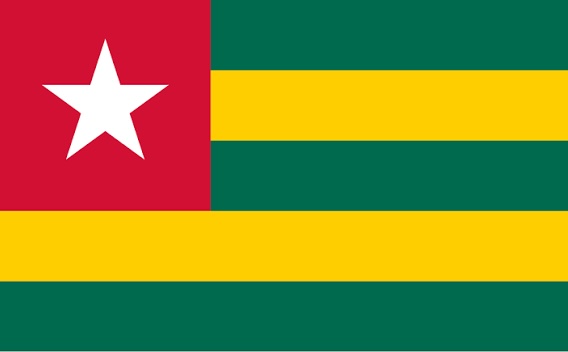
MOYO is an intimate audio documentary set in a craft brewery on the coast of Togo. The work follows a daughter’s month-long visit to her father, who returned to his homeland after 30 years to start a brewery: ‘MOYO BRASSERIE’. “MOYO” is a piece about the importance of telling stories and passing them on. A story of silence, unanswered questions and slow revelations. Shared from a hammock on the warm beach of the Togolese coast, with chickens, Moyo the dog and the sound of waves in the background. After all, what does it mean to succeed in life and what is a home? Which choices shape that path, what do we leave behind, and what do we carry with us?
Katharina Smets (supervision), Michiel De Malsche (music), Manu De Ferrere (additional sound), Gillis Van Der Wee (mix), Nick Jordens (audiovisual support), RITCS School of Arts (support), DeAuteurs (support) and MOYO Brasserie
Translation by Omara Poppe, with help from Charlotte Provost
Omara Poppe (2002°) is a Belgian, Togolese audio-maker based in Brussels. ‘MOYO’ was her graduation piece for the master program in Audiovisual Arts, Radio at RITCS School of Arts and today she is finishing a masters degree in Social and Cultural Anthropology. In her work she explores themes of migration, memory, space and (non)human relationships. She is currently researching sound and listening in border landscapes and developing an audio walk on continuing colonial traces in public space.
ARVE error: Mode: lazyload not available (ARVE Pro not active?), switching to normal mode
A place where men drink and women dream.
By Viktoras Jakovlevas for LRT (2008)
After the school was closed, the shop became the most important public space in the village of Varputėnai, Lithuania. There is a public library, and a priest comes on Sundays to hold a church service, but the shop is a place where the locals exchange the news and discuss current events when they stop by for a beer after work. This is where people come just to talk.
Produced by Viktoras Jakovlevas
Edited by Annick Lesage
Sound design by Apollo Sillen
English translation by Živilė Kropaitė
Winner of best radio documentary at the Lithuanian Radio and Television Awards and featured at the International Feature Conference (IFC) in Dublin, Ireland, 2009.
Viktoras Jakovlevas is a journalist, news presenter, and a Lithuanian radio documentary pioneer. Back in 2008, along with his then colleague Justina Mitkaitė they started and co-produced ‘Radio documentary’ the first ever program dedicated to crafted radio features at the Lithuanian national broadcaster, LRT.
‘The Shop’ was his project for the EBU Master School on Radio Features training program 2007–2008.
Today it is widely regarded as a Lithuanian radio documentary ‘classic’.
To hear more work (with subtitles) from LRT visit their website here
This year LRT turned 100 years old. Learn more here.
ARVE error: Mode: lazyload not available (ARVE Pro not active?), switching to normal mode
Meaning emerges from a soundscape of bells
By Maria Margaronis (2026)
For centuries, great flocks of sheep and goats grazed the mountains of Greece and the Balkans. Some herders were completely nomadic, travelling with their whole household between grazing grounds. Now very few shepherds make the traditional journey to the high pastures each spring and down again each autumn. Theoharis Gratsos has been a shepherd his whole life in the Zagori region of northwestern Greece.
ARVE error: Mode: lazyload not available (ARVE Pro not active?), switching to normal mode
By Mette Post Riggelsen (2026)
A sonic crown of sonnets about that horrible moment, when you mother dies and becomes particles of light without a word. A poetic tribute to mothers, to life and to the Danish poet Inger Christensen.
First created for the HearSay festival in 2026 where this feature won the Art prize.
Idea, text and production: Mette Post Riggelsen
Sound design: Lasse Laurentius Nolsøe Lund
Marimba: Anton Post Sokoler and Olivia Post Sokoler
Translation: Roxanne Batty
Mette Post Riggelsen is a an independent Danish audio-maker at Lydskolen and part of year 1 of Æteren – a school and community for creative audio storytelling. She creates audiowalks, documentaries, educational material, poetry and other sorts of sonic quirkiness.
ARVE error: Mode: lazyload not available (ARVE Pro not active?), switching to normal mode
An experimental Scots translation of ‘Catullus 63’ tells the story of a young athlete driven mad by the Mother Goddess, driven to become an orgiastic priestess in the wild mountain woods, in a cacophonous reimagining of the Latin classic as a trans hymn to the Caledonian Forest.
By Harry Josephine Giles and Callie Rose Petal (ⁿᵒᵗBorges) for Radiophrenia (2026)
“Attis in Caledon” uses the full force of Scots to create a contemporary version of galliambic metre, the ancient poetic form of Cybele’s centuries-long trans priesthood, and the poetry is complemented by original music and archival material woven together into a new work of noise alchemy. We ran through the ancient pines of Coille Choire Chuilc in the foothills of Beinn Os to bring you this magic.
It was commissioned for Radiophrenia’s Lost in transmission – a series of events presenting non-English language radio works with subtitled translations in cinema spaces around Scotland. Learn more about Radiophrenia here.
Harry Josephine Giles is a writer and performer from Orkney, living in Leith. Her latest book is the poetry collection Them! (Picador 2024). Her verse novel Deep Wheel Orcadia (Picador 2021) won the 2022 Arthur C. Clarke Award for science fiction book of the year. Her poetry collections The Games (Out-Spoken Press, 2018) and Tonguit(Freight Books 2015) were between them shortlisted for the Forward Prize for Best First Collection, the Saltire Prize and the Edwin Morgan Poetry Award. Her stage show of her poetry sequence Drone toured internationally in 2019, and the performance of Deep Wheel Orcadia will tour in 2025. She has a PhD in Creative Writing from the University of Stirling.
Callie Rose Petal is a Scottish avant-garde conceptual performance artist, composer, software developer, and language artist. Her work spans experimental literature, noise composition, and transmedia ritual. She is known for her work as a “noise alchemist”, fusing experimental sound, ritual structure, and semiotics.
ARVE error: Mode: lazyload not available (ARVE Pro not active?), switching to normal mode
How do you make a life or death decision?
By Luis Trelles for Radio Ambulante (2018)
In Puerto Rico in 2012, a jury faces the possibility of sentencing someone to the death penalty – nearly a century after its abolition in 1929. Whilst the constitution of Puerto Rico has expressly banned the death penalty since the 1920s, it is still possible to enact it for federal crimes.
Juror No. 10 (La jurado 10) was created for the Radio Ambulante podcast. Listen to their episodes and follow along on their English or Spanish transcripts.
Radio Atlas turned ten years old this year! To celebrate, Sheffield DocFest are hosting a special birthday screening this Thursday evening (11th June) at 6pm. Come and join us to listen to subtitled audio! Book a ticket here.
This podcast originally aired on Radiotopia’s Selects. It’s a home for inventive, weird, excellent audio from the archives. Hear more here. I thoroughly recommend it.
The radio archives documentary I talk about with Mitra Kaboli is called Into the Ether and you can listen to it here.
And while I’m shamelessly promoting things – Short Cuts, Falling Tree’s home for adventurous short documentaries, is returning for a 12 episode series on CBC, ABC and the BBC in 2027.
ARVE error: Mode: lazyload not available (ARVE Pro not active?), switching to normal mode
What holds everyday life together after separating?
By Stefanie Müller-Frank (2026)
Alone at home with her daughters, Stefanie found herself living in a parallel universe made of new rules, long nights and polar bears who never have to cry.
Just the Three of Us (Nur wir drei) received the Human Award at this year’s HearSay Festival.
Stefanie Müller-Frank is a German journalist living in Basel, Switzerland.
The piece was produced by the audio maker Laura Bachmann.
ARVE error: Mode: lazyload not available (ARVE Pro not active?), switching to normal mode
Parenting in a burning world
By Åsa Secher (2026)
It’s surreal becoming a mother when the world is on fire. To have your world become smaller, as you focus on all the little things, like teaching a small child to eat or to talk, knowing that the world outside of this little bubble is falling apart. When I lose my patience because my kid refuses to go to bed, I think about all the parents who will never again get to put their kids to sleep and the contrasts are almost unbearable. So how do I enjoy the little things, and at the same time try not to turn a blind eye to all that is happening around the world? I have no idea.
Created, produced, edited and mixed by Åsa Secher. Monday won the HearSay Festival Provoke Award.
Åsa Secher is a radio producer based in Stockholm. They write a monthly podcast recommendation newsletter in Swedish, which you can read here.
ARVE error: Mode: lazyload not available (ARVE Pro not active?), switching to normal mode
How should the ones left behind talk to those who have died?
By Leo Rehnfeldt (2026)
First created for the HearSay festival in 2026, this piece forms part of a larger project on posthumous conversation.
Linda is the name of the piece’s protagonist – Linda Körner Fernando. It is also a Swedish verb meaning to swaddle. To provide comfort by wrapping someone, usually an infant, in a blanket or pieces of cloth.